Dry calcium hypochlorite chlorination for commercial pools
Pulsar feeders store chlorine as a solid and make chlorine solution only when the controller asks for it. For the right facility that means fewer deliveries, no bulk liquid, and capacity for peak demand. FreyTech evaluates fit by measured demand, installs the loop, trains operators, and services the system across New York State.
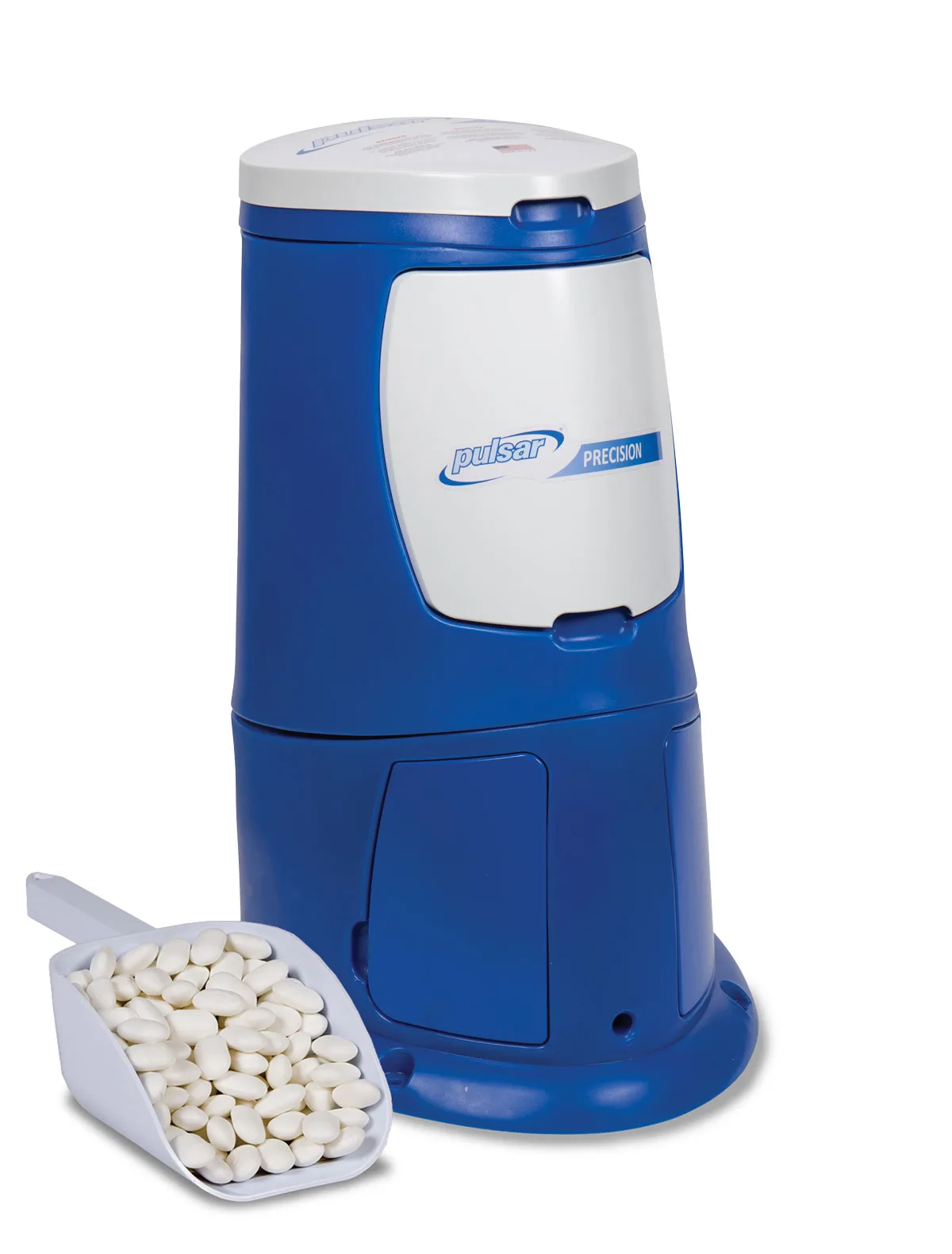
Calcium hypochlorite is a solid that releases available chlorine when dissolved. A Pulsar feeder holds briquettes in a hopper above a spray chamber. When the controller signals demand, water sprays the briquettes and the resulting chlorine solution flows into the pool's recirculation line. Between demands the briquettes stay dry, so the chemical is stored as a stable solid rather than as bulk bleach that loses strength in storage.
Suitable facility types
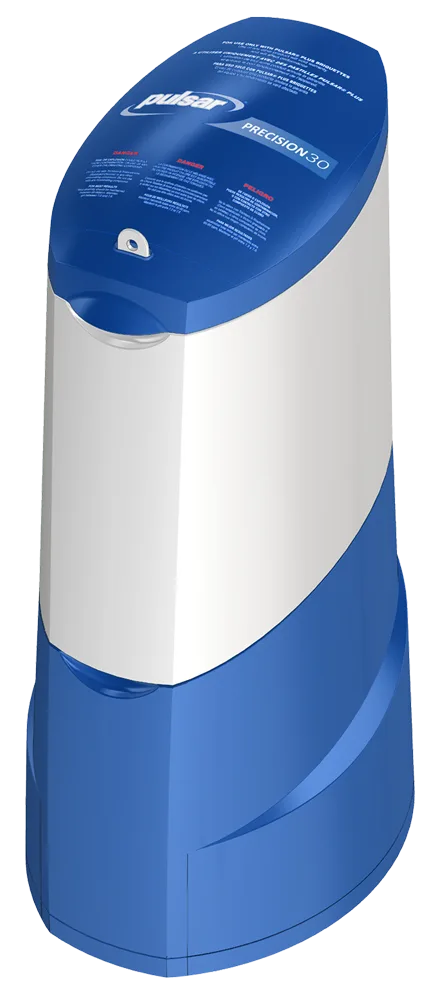
The full-size Precision is positioned by Pulsar for very large pools: competition venues, municipal aquatic centers, and waterparks. The Precision 30 brings the same approach to mid-size institutional pools. Small warm therapy pools and spas rarely need either; control and visibility matter more there.
Facility size and demand
Pulsar publishes gallonage guidance, and its own pages disagree with each other for the Precision 30. FreyTech sizes by measured chlorine demand: daily chlorine use from records, peak bather load, temperature, indoor or outdoor exposure, and turnover. Because New York prohibits stabilizer, only the non-stabilized outdoor guidance applies in our territory.
Storage, handling, ventilation, and the mechanical room
Calcium hypochlorite is an oxidizer. It needs dry, cool, ventilated storage segregated from acids and organics, original closed containers, SDS on site, and a loading routine with PPE. Local fire code and the health department review storage quantities and location. The feeder itself needs a water loop (booster pump for Precision; flow-based Venturi for Precision 30), drainage, clearances, and power. Cal hypo adds calcium hardness over time, so pH control and water replacement are part of the design.
Converting from liquid or gas chlorine
Conversions remove bulk bleach storage or gas cylinders and their handling burden. Expect to re-plan chemical storage, adjust pH control, confirm the controller's demand output and interlocks, and involve the engineer for plan review where treatment equipment is modified (10 NYCRR 6-1.8). Gas conversions also remove the qualified-operator requirement that gas chlorine triggers.
Operational workflow
What running a Pulsar system looks like
1
Load
Operators keep the hopper stocked with Pulsar Plus briquettes from segregated dry storage, using the PPE and routine covered in training.
2
Demand
The chemistry controller (BECSys5 or another controller with a chlorine-demand output) calls for chlorine when ORP or PPM drops below setpoint.
3
Erode and deliver
Water sprays the briquettes, producing a chlorine solution that is carried into the recirculation loop; when demand is met the spray stops and the briquettes sit dry.
4
Interlock
Feed is locked out when recirculation stops, through the controller and optionally an independent interlock.
5
Clean and maintain
Scheduled cleaning of the hopper, nozzles, and solution tank keeps delivery consistent; wear parts are replaced on service visits.
Products
Pulsar equipment FreyTech evaluates, installs, and services
Patented high-capacity erosion feeder for calcium hypochlorite briquettes; manufacturer-rated for 500,000 to 1,000,000+ gallon pools; up to 189 lb/day available chlorine.
Available through FreyTech
Best fit: Competition venues, Municipal aquatic centers, Waterparks
Pulsar Systems (Solenis); Pulsar is a trademark of Innovative Water Care, LLC or its affiliates. Specifications summarized from Pulsar literature accessed September 2026. FreyTech is an independent dealer and service provider; authorized-dealer status for your county should be confirmed with FreyTech.
Next step
Find out whether dry chlorination fits your facility
Pool volumes, current disinfection method, and daily chlorine use are enough to start. We will tell you honestly whether a Pulsar system makes sense and which model.
Serving commercial aquatic facilities across New York State.

 Featured