
Pulsar Plus Calcium Hypochlorite Briquettes
Calcium hypochlorite briquettes for Pulsar Precision and Precision 30 feeders. Pulsar's warranty requires Pulsar Plus briquettes.
Available through FreyTech
Serving commercial aquatic facilities across New York State.

Chemical delivery · Pulsar Systems
High-capacity chlorine delivery for pools whose volume and bather load justify it. FreyTech sizes by measured chlorine demand, installs and commissions the loop, trains operators, and services the system across New York State.
How it works
Pulsar Precision feeders hold calcium hypochlorite briquettes in a hopper. When the chemistry controller calls for chlorine, water sprays the briquettes, eroding a measured amount into a concentrated chlorine solution that is carried into the recirculation loop. When the controller is satisfied, the spray stops and the briquettes sit dry. The chemical is stored as a stable solid, not as bulk liquid.
The manufacturer describes the full-size Precision as a patented high-capacity erosion (HCE) system. Both models are NSF Listed according to Pulsar, and both require Pulsar Plus briquettes to keep the manufacturer's warranty.
Models and manufacturer specifications
Figures below are taken from Pulsar's published operation and installation manuals and product pages (accessed September 2026). Final sizing depends on chlorine demand, bather load, hydraulics, operating conditions, storage, and applicable codes.
Model PS-1HCE
Patented high-capacity erosion (HCE) feed system for very large pools; manufacturer-rated for 500,000 to 1,000,000+ gallon pools.
| Chlorine delivery (pools) | 5–189 lb available chlorine per day; maximum 7.8 lb/hrSource: Pulsar Precision O&I Manual Rev 1.0 (2020), Table 8 |
|---|---|
| Solution strength | 0.6–0.8% available chlorine at 84 °F inlet waterSource: O&I Manual, Table 8 |
| Dry chemical capacity | 100 lb hopper plus 50 lb reserve of Pulsar Plus briquettesSource: O&I Manual, Table 7 |
| Footprint / weight | 29.8 in L × 25.3 in W × 40.9 in H; approximately 220 lb operatingSource: O&I Manual, Table 7 |
| Water supply | Booster-pump / Venturi loop; inlet 2.5–3.5 gpm at 30–40 psigSource: O&I Manual, Table 5 |
| Electrical | 120/240 VAC, single-phase, 50/60 Hz, 15–20 ASource: O&I Manual, Table 5 |
| Listing | NSF Listed (Pulsar does not state the standard number)Source: pulsarpools.com cal hypo feed systems page |
| Manufacturer warranty | 12 months from installation or 18 months from shipment, whichever is earlierSource: O&I Manual |
Model PS-1HCE30
Compact flow-based calcium hypochlorite feeder for small and mid-size commercial pools.
| Chlorine delivery (pools) | 2–36 lb available chlorine per day; maximum 1.5 lb/hrSource: Pulsar Precision 30 O&I Manual Rev 1.1 (2023), Table 12 |
|---|---|
| Recommended pool size (product page) | 10,000–300,000 gallonsSource: pulsarpools.com/products/pulsar-precision-30/, accessed 2026-09-26 |
| Detailed sizing guidance (installation manual) | Indoor pools up to 200,000 gal; outdoor non-stabilized up to 90,000 gal; outdoor stabilized up to 150,000 gal; spas up to 15,000 gal (nominal bather loads)Source: O&I Manual Rev 1.1, Table 12 |
| Solution strength | 0.2–0.3% available chlorineSource: O&I Manual Rev 1.1 |
| Dry chemical capacity | 30 lb of Pulsar Plus briquettesSource: O&I Manual Rev 1.1, Table 11 |
| Footprint / weight | 19.5 in D × 15.5 in W × 34 in H; approximately 50 lb operatingSource: O&I Manual Rev 1.1, Table 11 |
| Water supply | Flow-based Venturi bypass; 1.25 gpm at 5 psi filter pressure in the standard installation (booster-pump variants exist)Source: O&I Manual Rev 1.1, Fig. 1 and Table 12 |
| Listing | NSF Listed (standard number not stated by Pulsar)Source: pulsarpools.com |
| Manufacturer warranty | 12 months from installation or 18 months from shipment, whichever is earlierSource: O&I Manual Rev 1.1 |
Manufacturer literature: Pulsar Precision product page · Pulsar Precision 30 Operation & Installation Manual (Rev 1.1, 2023) · bid spec, CAD, and schematics. FreyTech supplies, installs and services Pulsar Precision systems across New York State.
Pool volume and chlorine-demand qualification
We will tell you if your pool is not a fit. Feed capacity you do not need is money that should have gone into control, visibility, or filtration.
Alternatives
An honest comparison. Each approach has a place; the assessment shows which one fits your pool.
| Approach | Strengths | Trade-offs |
|---|---|---|
| Liquid sodium hypochlorite (bleach) | Familiar; simple metering pumps; widely available. | Deliveries and bulk storage; degrades in storage, especially in heat; high liquid volumes handled; raises pH and TDS. |
| Calcium hypochlorite erosion feeders (Pulsar Precision, other brands) | Dry chemical with long shelf life; concentrated; on-demand solution; lower handled volume. | Adds calcium hardness over time; requires oxidizer storage discipline; feeder cleaning and briquette logistics. |
| Trichlor tablet feeders | Common in small pools. | Adds cyanuric acid, which New York prohibits in public pools (10 NYCRR 6-1.11); generally unsuitable in our territory. |
| Gas chlorine | Inexpensive chemical; high capacity. | Acute hazard; regulatory and staffing burden; New York requires a qualified operator wherever gas is used; many facilities are converting away from it. |
| Salt chlorine generation | On-site generation; fewer deliveries. | Capital cost, electrical and salt effects on the facility, cell replacement, and demand limits at large volumes. |
Chemical storage and handling
Cal hypo briquettes are stable when stored correctly and hazardous when they are not. Before any feeder is specified, we review where the chemical will be stored and how it will be handled.
Operator training at commissioning covers loading, cleaning, and what to do when the feeder or controller alarms.
Maintenance and service
Installation, commissioning, training
Volume, turnover, bather load, indoor or outdoor exposure, temperature, and current daily chlorine use establish the real requirement.
Booster-pump or flow-based Venturi loop, injection point, clearances, drainage, and electrical are checked against the manufacturer's manual.
Segregated, ventilated, dry storage for calcium hypochlorite; SDS on site; local fire-code review. Storage often decides feasibility.
The feeder is driven by the chlorine-demand output of a BECSys5 or compatible controller with flow interlock and failsafe timers.
Where the change modifies treatment equipment, plans by a New York-licensed design professional may be required (6-1.8). We coordinate with your engineer.
FreyTech installs the feeder and loop, verifies solution strength and delivery, tests interlocks, and records settings.
Operators learn loading, cleaning, and troubleshooting; service visits keep the feeder clean and delivery consistent.
Calcium hypochlorite briquettes for Pulsar Precision and Precision 30 feeders. Pulsar's warranty requires Pulsar Plus briquettes.
Available through FreyTech
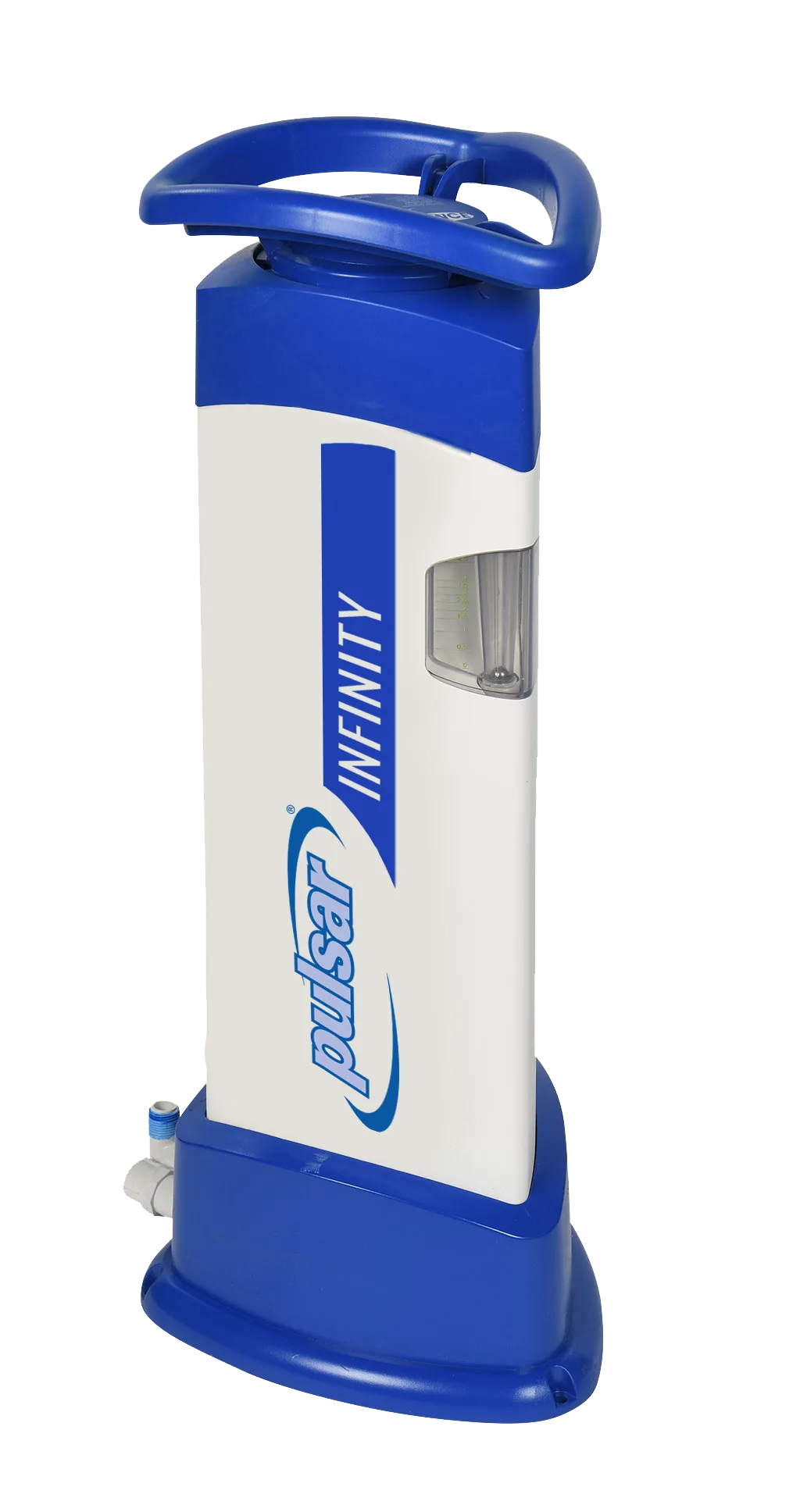
Pulsar Infinity is an erosion-style feeder that dissolves Pulsar's slow-dissolving calcium hypochlorite tablets into a chlorine solution for pools from roughly 5,000 to 150,000 gallons.
Available through FreyTech
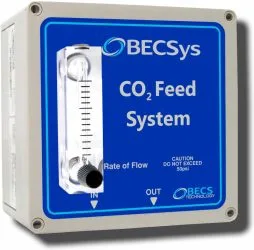
BECS Technology CO2 feed system in 5–50 and 20–200 SCFH sizes with diffuser or Venturi eductor; NSF/ANSI 50 listed per BECS.
Available through FreyTech
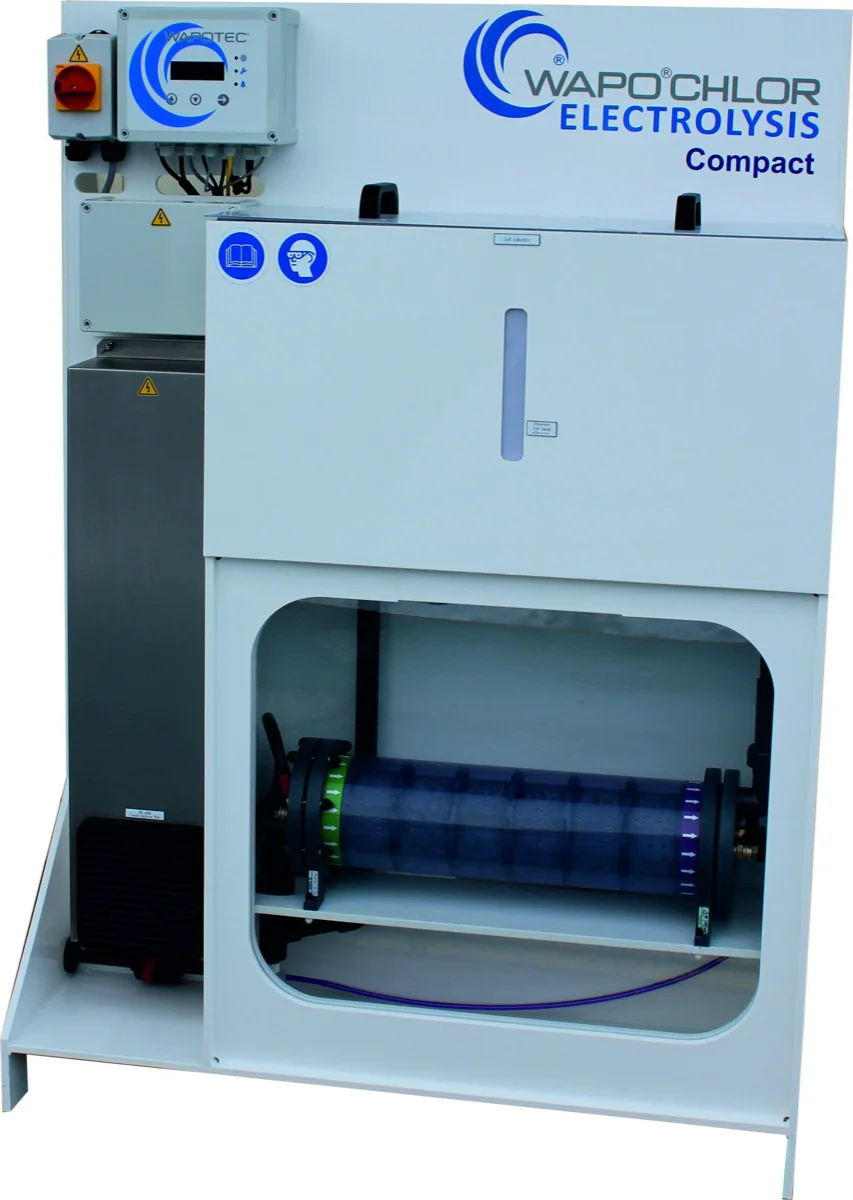
WAPO Chlor systems generate a 0.6 percent sodium hypochlorite solution on demand from diluted brine and electricity, replacing delivered liquid chlorine or calcium hypochlorite. Factory pre-assembled Compact and PRO series units cover roughly 30 to 8,500 g/h of chlorine equivalent.
Available through FreyTech
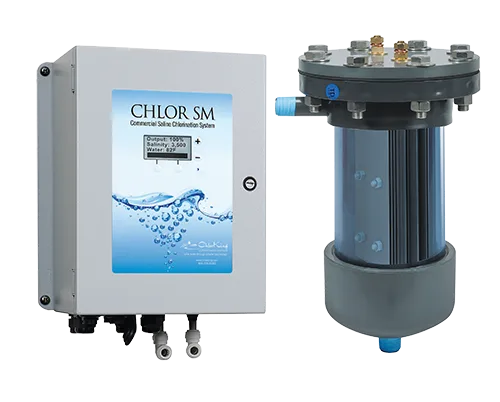
CHLOR SM is ChlorKing's in-line salt chlorinator for commercial pools: a mild saline pool is passed through an electrolytic cell that makes chlorine on site, so there is no chlorine delivery or storage.
Request availability
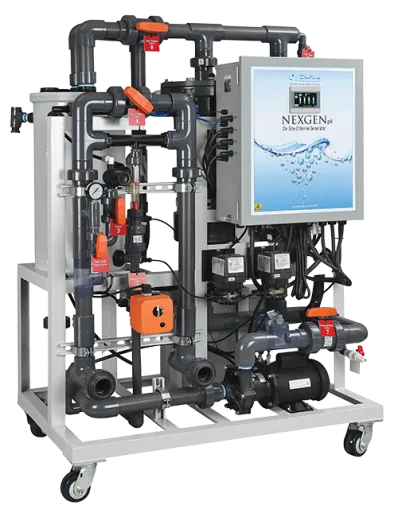
NEXGEN makes a pH-balanced sodium hypochlorite solution on site from a brine tank and pool water, so the pool itself is not converted to saline and no chlorine is delivered or stored.
Request availability
Pulsar Infinity is an erosion-style feeder that dissolves Pulsar's slow-dissolving calcium hypochlorite tablets into a chlorine solution for pools from roughly 5,000 to 150,000 gallons.
Available through FreyTech
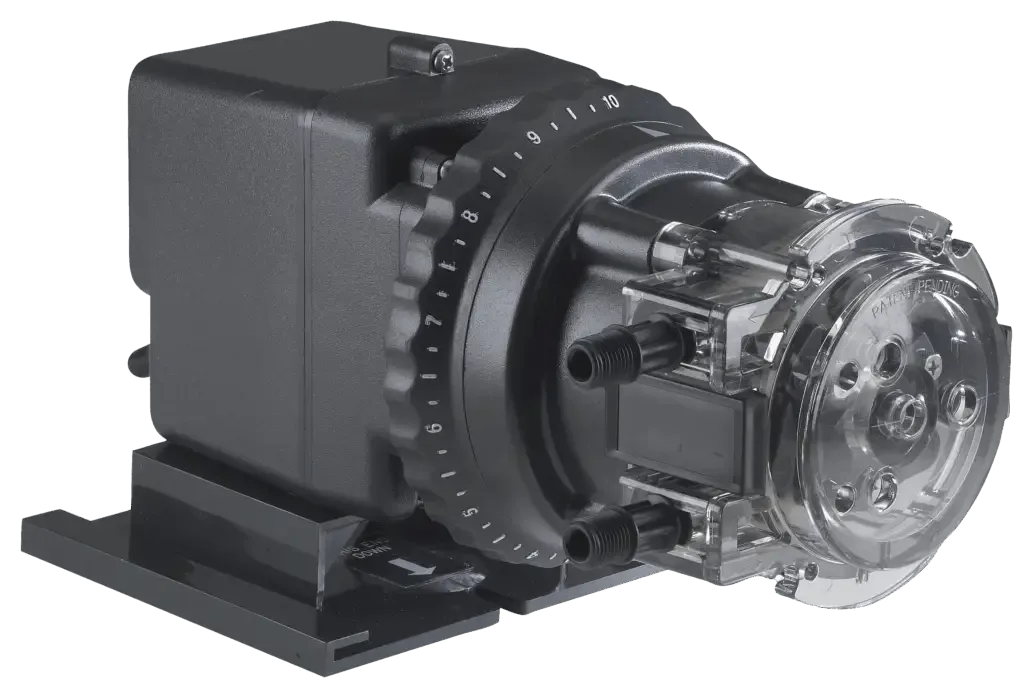
Stenner's Classic Series is a peristaltic metering pump: the chemical moves through a replaceable tube squeezed by rollers, so it never touches the pump mechanism and the pump can run dry or handle off-gassing bleach without losing prime.
Request availability
By chlorine demand, not gallons. We look at pool volume, turnover, peak bather load, indoor or outdoor exposure, water temperature, current daily chlorine use, hydraulics, and chemical-storage space. Pulsar's published sizing figures are a starting point only.
Often neither is required; a properly controlled liquid or existing feed may be adequate. Where a switch to cal hypo makes sense, the Precision 30 is the usual candidate for pools up to Pulsar's published 300,000-gallon ceiling. The full-size Precision is intended by the manufacturer for pools of 500,000 gallons and up, which leaves a gap between the two models for pools in the 300,000–500,000-gallon range; we size those by measured chlorine demand.
Generally no. New York's Sanitary Code prohibits cyanuric acid (stabilizer) in public pools (10 NYCRR 6-1.11), so for outdoor pools in our territory the manufacturer's non-stabilized guidance is the relevant figure.
Keep the hopper stocked with briquettes, keep the feeder clean per the manual, and monitor the controller. Cal hypo is an oxidizer and must be stored and handled as the SDS and your local fire code require; we cover this in training.
The feeder's solenoid is driven by the chlorine-demand output of a chemistry controller. It is commonly paired with BECSys5, and it can be driven by other controllers with a suitable output. We confirm compatibility during the assessment.
Liquid sodium hypochlorite with metering pumps, other calcium hypochlorite tablet feeders, trichlor feeders (not appropriate for most New York public pools because of stabilizer), gas chlorine where still permitted, and on-site salt chlorine generation. Each has trade-offs in capacity, handling, storage, and cost; the assessment compares them for your facility.
FreyTech has offered chemical delivery as part of its service programs. Cal hypo supply arrangements for your location should be confirmed with us.
FreyTech supplies, installs and services Pulsar Precision systems for facilities across New York State. Contact us and we will confirm coverage and lead time for your county.
Pulsar and Pulsar Precision are trademarks of Innovative Water Care, LLC or its affiliates. Specifications are summarized from Pulsar literature accessed September 2026; confirm current figures with FreyTech before design. FreyTech is an independent dealer and service provider.
Next step
Send us your pool volumes, current disinfection method, and daily chlorine use if you have it. We will tell you honestly whether a cal hypo feeder makes sense, which model, and what else should come first.
Serving commercial aquatic facilities across New York State.